
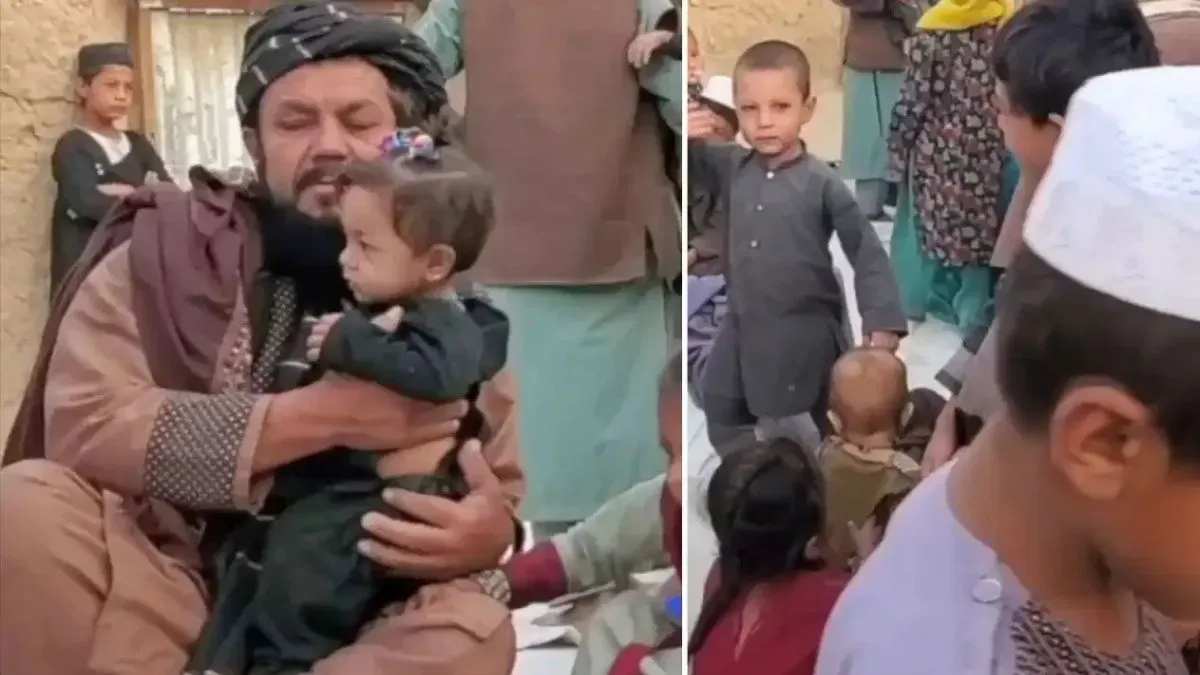
Large family Poverty: दुनिया में कब, कहां और कौन सी ऐसी अजीबोगरीब कहानी सामने आ जाए, जो किसी को भी हिलाकर रख दे, इसका अंदाजा लगाना मुश्किल है। इन दिनों अफगानिस्तान के उरुजगान प्रांत से एक ऐसा ही मामला इंटरनेट पर सुर्खियां बटोर रहा है, जिसे पढ़कर हर कोई सन्न रह गया है।
यहां रहने वाले 57 साल के मोहम्मद सादिक की जिंदगी किसी फिल्मी स्क्रिप्ट जैसी लग सकती है, लेकिन इसके पीछे का सच बेहद खौफनाक और दर्दनाक है। सादिक चार पत्नियों के पति हैं और कुल 70 बच्चों के पिता बन चुके हैं, (uruzgan man 70 children जिनमें से 58 बच्चे आज जीवित हैं। (afghanistan large family news) हालात इस कदर बेकाबू हैं कि इस विशाल परिवार का मुखिया अपने ही कई बच्चों के नाम तक भूल चुका है और उन्हें बस ‘बेटा’ कहकर पुकारने को मजबूर है।
खंडहर जैसा घर और चूल्हा जलाने के लिए कागज का सहारा
हाल ही में बीबीसी (BBC) को दिए एक इंटरव्यू में सादिक ने अपनी तबाही और बेबसी की दास्तान बयां की। उनका आशियाना किसी खंडहर से कम नहीं है, जहां न तो पक्के दरवाजे हैं और न ही खिड़कियां। (afghanistan child marriage crisis) कमरों को आपस में बांटने के लिए सिर्फ फटे-पुराने पर्दों का सहारा लिया गया है। इस घर में गरीबी इस हद तक हावी है कि मासूम बच्चों को अक्सर भूखे पेट ही सोना पड़ता है।
कड़ाके की ठंड से बचने और दो वक्त की रोटी पकाने के लिए घर में लकड़ियां तक मौजूद नहीं हैं। हालात इतने बदतर हैं कि छोटे-छोटे बच्चे गलियों से कूड़ा-करकट और प्लास्टिक बीनकर लाते हैं, जिन्हें जलाकर किसी तरह चूल्हा गर्म किया जाता है। पैरों में पहनने के लिए जूते न होने की वजह से कई बच्चे नंगे पांव ही धूल-मिट्टी में घूमने को विवश हैं।
नाममात्र की कमाई और बाल विवाह का दर्द
इतने विशालकाय परिवार का भरण-पोषण करने के लिए मोहम्मद सादिक एक कार डीलरशिप पर दिहाड़ी मजदूरी करते हैं। उन्हें एक कार बिकवाने पर महज 1,000 अफगानी (भारतीय मुद्रा में करीब 1,458 रुपये) मिलते हैं। (poverty in afghanistan viral news) इतनी मामूली सी आमदनी में चार पत्नियों और दर्जनों बच्चों का गुजारा करना असंभव सा है।
सादिक की पत्नियों की शादियां भी बेहद कम उम्र में कर दी गई थीं। कम उम्र में मातृत्व और उचित देखरेख के अभाव में उनके कई बच्चे बचपन में ही दम तोड़ चुके हैं। हालांकि, सादिक ने यह कभी साफ नहीं किया कि चरमराती आर्थिक स्थिति के बावजूद वे लगातार परिवार क्यों बढ़ाते रहे, लेकिन उन्होंने यह जरूर कुबूला कि वे अपने बच्चों को बेहतर जिंदगी देने में नाकाम रहे हैं।
Four wives. Seventy-two children. Fourteen have died. And the surviving children are struggling to get through each day.
I watched the BBC footage featuring Mohammad Sadiq, a 57-year-old Afghan man, and what struck me was the enormous distance between his ambitions as a father and the reality of his family’s existence.
According to the report, Sadiq married his four wives when they were between 13 and 16 years old. Together, they gave birth to 72 children, of whom 58 are still alive.
The footage shows a household struggling with severe poverty. Children are seen living in difficult conditions, with inadequate shelter and limited resources. Their father reportedly cannot even remember all their names.
But one particular statement attributed to him deserves serious scrutiny.
He reportedly wanted to have more children to increase the number of followers of Prophet Muhammad.
I find this deeply disturbing.
I respect every individual’s right to practise their religion. But I cannot accept the idea that increasing the population of a religious community is, by itself, a meaningful accomplishment.
What exactly has been achieved when the children born in pursuit of that ambition are left struggling for basic necessities?
Faith should be a matter of personal conviction, not a numerical contest between communities.
And no religious aspiration should take precedence over the wellbeing of the people whose lives are affected by it.
There is another uncomfortable aspect of this story that deserves greater attention: the extraordinary imbalance of power between the man making these decisions and the women living with their consequences.
Four girls reportedly entered marriage before reaching adulthood. We know very little about their personal wishes, the choices available to them or whether they had any meaningful control over the number of pregnancies they experienced.
That uncertainty should concern us.
Marriage should never mean surrendering one’s bodily autonomy. Motherhood should not be treated as an obligation that women must fulfil repeatedly to satisfy the expectations of husbands, families or religious communities.
I also find it troubling how easily society can turn extreme fatherhood into a spectacle.
A man with dozens of children becomes an extraordinary news story. People discuss the numbers, express disbelief and move on.
Meanwhile, the women who endured the pregnancies remain largely unheard, and the children become statistics in someone else’s remarkable life story.
That is a deeply unequal way of looking at a family.
Afghanistan’s economic crisis and restrictions on women’s opportunities undoubtedly form part of the wider background. But poverty cannot explain away every personal decision, just as individual responsibility cannot explain away systemic deprivation.
Both deserve examination.
We should also resist the temptation to turn this family’s suffering into an attack on Muslims generally. The actions and beliefs of one individual cannot reasonably be attributed to millions of people who share his religion.
My criticism is directed at the decisions, attitudes and power structures reflected in this particular story.
I do not believe the size of a family determines its worth. A large family can be loving, stable and responsible. A small family can be neglectful.
What matters is the freedom of the adults involved and the quality of life available to those who depend on them.
Sadiq’s children did not choose the circumstances of their birth. They deserve education, healthcare, security and the possibility of a future different from the one they have inherited.
And the women deserve to be recognised as individuals with their own aspirations, not merely as mothers within an unusually large household.
Watching this story, I kept returning to a simple question.
What is the point of bringing more people into your faith if you cannot ensure that the people already entrusted to your care are treated with dignity?
A man’s legacy should never be measured by how many children carry his name.
It should be measured by how responsibly he has treated the lives placed in his hands.
— Gopinathan Vijayaraman (@gopinathvijay91) October 22, 2026
मीडिया रिपोर्ट्स के मुताबिक, अफगानिस्तान में मौजूदा हालातों के चलते बाल विवाह के मामलों में भारी बढ़ोतरी हुई है। कई परिवार अपनी आर्थिक तंगी के चलते बेटियों की कम उम्र में शादियां करने पर मजबूर हैं। अस्पतालों के आंकड़े बताते हैं कि कम उम्र की माताओं की संख्या में तेजी से इजाफा हुआ है, जो इस बात का प्रमाण है कि वहां का समाज किस गंभीर और अमानवीय मानवीय संकट से जूझ रहा है।